
How to Effectively Portray Soft Skills in Government Applications

soft-skills-in-government-applications

While soft skills may not always be the primary focus in applications, especially for entry-level positions, their impact cannot be underestimated. Soft skills can significantly distinguish between candidates and effectively communicating their benefits to an organisation can enhance your chances of a successful application.


In this article, we delve into the meaning of soft skills, explore the differences between hard and soft skills, and provide practical tips on how to highlight soft skills in your resume and during interviews.

What Are Soft Skills?

Soft skills are interpersonal skills that describe how a person interacts and engages with other people in the organisation. Soft skills are required for all jobs, whether you’re a senior leader in a department or perhaps a data entry clerk on your first job after graduating from university.


Soft skills might sound like they’re not as important as qualifications or technical skills, but they can be a critical part of your career success. Those who are often high achievers have enhanced their soft skills from an early age.

Types of Soft Skills

There is no exhaustive list of best soft skills for resumes and CVs. Soft skills are developed over time, often on the job and these attributes may differ from one job to another. Thus, the best practice is to include attributes that are relevant to your professional person. Below is a list of soft skills for job applications that are relevant across a number of roles:

Complete job application bundles (CV + Selection Criteria) from $449

Hard vs Soft Skills

There are numerous differences between hard skills and soft skills. Hard skills are specific abilities or knowledge you acquire through education, training, or hands-on experience. These are often quantifiable and necessary for the technical demands of a job. Examples include software programming, financial accounting, technical writing, and proficiency in using specialised software tools.


On the other hand, soft skills relate to your personality traits and how you interact with others. They encompass your ability to navigate workplace dynamics, adapt to new situations, and communicate effectively. While these skills can be honed, they are less often taught in traditional educational settings and more nuanced to assess in professional environments.

Why Are Soft Skills Important?

Soft skills are often cited as the significant difference between candidates. Part of this is because when it comes to hard skills, many candidates will have similar hard skills. For example, those who are applying for a programming job might have the same programming degree, the same skills in programming languages, and perhaps even the same post-graduate qualifications.


Telling the difference between these two candidates would be almost impossible if it weren’t for soft skills. And soft skills also play a critical role in the success of a candidate. A candidate who has better time management and communication skills will be more productive than someone who is constantly late or cannot communicate with members of their team.

Individuals lacking persuasive or leadership abilities often find their career progression and earning potential limited within organisational structures. These soft skills are crucial for ascending to higher levels of responsibility and influence.


Moreover, hiring managers are not only looking for candidates who can fulfill the immediate requirements of a position. They increasingly prioritise the growth potential of applicants, recognizing that those with the capacity to develop can provide more value in the long run. Many HR and recruitment experts advocate for hiring individuals with potential to be trained and developed over those who might currently meet every criterion but show less promise for advancement.


Hiring managers also focus on the future leadership potential of candidates. In their search, they look for soft skills that are indicative of future success in higher roles, such as adaptability, strategic thinking, and the ability to inspire others. This forward-looking approach ensures that new hires not only fit the current needs but are also valuable assets for future organisational growth.

How to Improve Your Soft Skills

Although there are no formal qualifications for soft skills, numerous resources are available to help you develop these essential capabilities. You can find a wealth of tutorials and courses online on MOOC platforms and even on YouTube. Additionally, professional development courses specifically designed to enhance both specific and general soft skills are widely accessible.


It’s also important to recognize and value the soft skills you naturally possess. Many individuals overlook their innate abilities because they do not traditionally view personality traits as measurable skills. By identifying and promoting these natural strengths in your applications, you can avoid selling yourself short and significantly enhance your competitiveness. These inherent soft skills, often underestimated, can be pivotal in achieving professional success.

How to Demonstrate Soft Skills on Your Resume

For those who are applying for roles in the Australian government, soft skills are going to be a major focus. So here are some tips on how you can list your soft skills on an application.

Don’t List Soft Skills in a Skills Section

While many people might think that it is counterintuitive, listing soft skills in the skills section is not very valuable. Soft skills are not tangible, like hard skills, they’re a subjective skill that requires additional proof. Therefore, save soft skills for other sections of the resume, where you can demonstrate what you have.

Use the Work Experience Section

The best location for any soft skill listing is to demonstrate their application within the work experience section of your resume. Use the bullet points of your duties and achievements to demonstrate what you’ve done using your soft skills, without listing what soft skills you have.

Use Action Verbs and Statistics

You must be demonstrating their use, not that you have them. Anyone can claim to have great leadership skills, but that doesn’t mean anyone has good leadership skills. The best way to demonstrate anything is to give examples of what you did (actions) and the impact it had. Using statistics quantifies the skills and demonstrates your value to the organisation.


For example, if you want to demonstrate your problem-solving skills, you can state – “Resolved a long-standing bottleneck in the supply chain, enhancing process flow and reducing costs by 15% within the first quarter.” Here, the use of ‘resolved’ as an action verb clearly depicts your problem-solving ability and the tangible benefits it brought. 

Highlight Transferable Skills

Soft skills aren’t industry-specific. They can be transferred from one industry or job role to another. In today’s modern working environment, you can focus on new soft skill trends such as virtual teamwork, online project management, and digital literacy.

Choose the Right Soft Skills

Not all soft skills are applicable. Conduct careful research into the department that you’re applying for to find what soft skills they want. Then tailor your resume for that job role/department so that it reflects the correct soft skills.

Soft skills might not be the first set of skills that you think about when you create your application or discuss your value with the hiring manager. But for any government job, they can be the decision point between a successful and an unsuccessful application.


Learning how to identify and improve your soft skills can be a great asset. It is equally crucial to adeptly demonstrate these skills in your resume and during the application process.

Picture of Ben Wood
Ben Wood

Public Service Careers Coach, PS Careers Practice Manager

APS Work Level Standards: What Are They?

aps-work-level-standard

The Australian Public Service (APS) Work Level Standards are designed to provide a clear and consistent framework for classifying roles across the public sector. These standards accommodate the diverse range of positions within government, outlining the competencies and capabilities expected at each classification level. By defining these expectations, the APS ensures that employees and applicants alike can understand what is required to perform effectively in their respective roles.

For those new to government work, however, navigating the APS Work Level Standards can be challenging. When applying for positions, it is crucial to accurately gauge the level at which you are expected to perform. Overestimating your competency level might suggest you are overqualified, which can sometimes work against you. On the other hand, underestimating your abilities could result in appearing underprepared for the role, even if you possess the necessary skills. Understanding these standards is key to aligning your qualifications with the expectations of the role and presenting yourself as a strong candidate.

Are Work Level Standards Everything That is Expected?

It’s important to understand that the work level standards are not a comprehensive list of all duties or responsibilities that a new hire will be expected to undertake upon a successful application. Instead, these standards serve as a tool to standardise key aspects of the recruitment process, ensuring fairness and consistency across public service departments.

However, the interpretation of work level standards can vary depending on the specific scope of the job. For instance, roles in more hazardous environments may require a stronger emphasis on risk management, even within the same classification level. While the work level standards provide valuable guidance, it’s crucial to consider the unique demands of the job you are applying for.

If you’re applying through an agency, they may offer additional insights and guidance on what specific competencies and skills are required for the role.

APS Job Levels and Work Level Standards

The Australian Public Service (APS) Work Level Standards encompass a range of classifications, from APS Level 1 through to APS Level 6. Beyond these, there are Executive Level 1 (EL1) and Executive Level 2 (EL2) for more senior roles, making a total of eight distinct levels commonly seen in APS job advertisements.


As you progress through these levels, the expectations and responsibilities increase significantly. For example, in the area of risk management, an APS Level 1 or 2 employee might be expected to identify risks associated with day-to-day tasks. In contrast, an APS Level 6 employee would be required to perform quality assurance on those risks and develop appropriate treatments within their area of responsibility.

It’s important to recognize that higher APS levels come with greater responsibility and a broader scope of influence within the public service.


In addition to specific job responsibilities, the APS sets clear expectations for employee behaviour, aligned with the APS Values, Employment Principles, and the APS Code of Conduct. These standards ensure that employees uphold the integrity and professionalism of the public service.


Furthermore, APS employees are expected to actively apply principles and practices related to the government’s commitment to workplace diversity, ensure a safe working environment, and foster collaboration within their teams.

Selection Criteria Review (Graduate)

Detailed assessment of your written statement starting at $99

User persona

Key Elements of APS Work Level Standards: Characteristics and Functions

The APS Work Level Standards are built around two core elements: Characteristics and Functions, each of which is further divided into specific subsections that define the expectations for different job levels.


Characteristics refer to broad statements that outline the general requirements and operational context for each job level. There are five key characteristics within this element:

        • Leadership and Accountability
        • Diversity Management
        • Stakeholder Management
        • Job Context and Environment
        • Independence and Decision Making

Functions, on the other hand, are more transactional and describe the typical duties expected at each level. A single role may encompass duties from multiple functions, allowing you to address specific requirements with targeted examples in your application.


The APS Work Level Standards identify five key functions:

Service Delivery: Involves delivering outcomes that support government department goals, program objectives, or specific government initiatives, with attention to both internal and external stakeholders.


Program and Project Management: Demonstrates the ability to manage risk, financial, human, physical, and capital resources within the department, ensuring that projects and programs are delivered as promised.


Policy: One of the most significant functions, this relates to the development of strategic policy within the department. It requires providing and interpreting policy advice through research and analysis, understanding role requirements, and consulting relevant policy documents and legislation.


Regulatory: Focuses on the design and implementation of compliance and enforcement programs. This function requires gathering information, conducting risk assessments, and ensuring alignment with government policies and frameworks.


Professional/Technical: Involves applying specialised knowledge to complete tasks within the framework of work goals. This function is often easier to demonstrate, particularly when professional qualifications align with the role’s requirements. However, you may need to obtain certain qualifications or certifications to meet the necessary standards.

Why is Understanding the APS Work Level Standards Important?

Understanding the APS Work Level Standards is crucial for tailoring your application to the role you’re applying for. By familiarising yourself with these standards, you can effectively revise your resume or application to highlight the specific skills and competencies that hiring managers are seeking.


For example, if the job posting specifies an APS WLS Level 3, particularly in the advisory section, they are looking for a candidate who can provide advice and guidance based on established policies and procedures set by senior leaders. You can enhance your resume by including a concrete example that demonstrates your ability to meet this requirement.


By consistently aligning your resume with the Work Level Standards, you increase your appeal to the recruitment team and significantly improve your chances of securing an interview.

The APS Work Level Standards provide a consistent framework for all job roles, allowing hiring teams to clearly define the skills and characteristics they seek in candidates. By understanding these standards and the specific requirements at each level, you can strategically tailor your resume to highlight the most relevant qualifications, increasing your chances of capturing the attention of the recruitment team.

What is a Transferable Skill?

transferable-skill

When exploring new career opportunities, whether it’s within a different organisation, department, or even an entirely new role, you’ll need to demonstrate your ability to succeed in these positions. This can be challenging, especially when you lack direct experience in the specific role or within the new company. However, it’s far from impossible. By leveraging transferable skills, you can confidently step into a wide range of roles, showcasing your adaptability and readiness to take on new challenges.


In this article, we will be discussing what transferable skills are and how you can apply them to your application for a government role.

What Are Transferable Skills?

Transferable skills are versatile abilities that you can carry with you across various job roles and industries. These skills, often referred to as soft skills, are not tied to a specific profession but are valuable in almost any workplace. You may have developed these skills throughout your career, or you might naturally possess them.

Improving your transferable skills is not only possible but also highly encouraged. Many educational institutions, including colleges and universities, offer programs and activities that help build these skills. You can also enhance them through volunteer work or in your current role by taking on new challenges and responsibilities.

In addition, online platforms provide a wealth of resources for developing transferable skills. Whether through YouTube tutorials, online courses, or training materials found via search engines, there are countless opportunities to learn and grow. Investing time in these resources not only strengthens your skill set but also demonstrates your commitment to personal and professional development—an attribute that is highly valued by employers.

Examples of Transferable Skills

Numerous traits are often counted as transferable skills. Here are some common transferable skills that you can consider adding on your resume in your next application.

Dependability: This transferable skill is about earning the trust of others to complete tasks or fulfil roles consistently. Dependability can be challenging to demonstrate, but using specific language to illustrate your reliability in past experiences can effectively convey this skill.

Leadership and Team Management: Leadership is a critical transferable skill, especially when applying for roles with growth potential. Demonstrating your ability to lead and manage teams shows that you have the potential to take on future leadership positions within the organisation.

Problem-Solving: The ability to think creatively and develop solutions to challenges is one of the most valued transferable soft skills in any environment. Highlighting your problem-solving skills can make you a highly desirable candidate and may even result in more competitive compensation.

Data Analysis: In today’s data-driven world, the ability to analyse information and draw meaningful conclusions is a crucial transferable skill. Successful candidates must demonstrate their capacity to interpret data accurately and use it to inform decision-making.

Communication: Effective communication is vital across all levels of an organisation. This transferable soft skill is not just for leaders—everyone needs to be able to clearly convey information and ideas to ensure team alignment and achieve better outcomes.

Complete job application bundles (CV + Selection Criteria) from $449

Time Management: Managing time efficiently is a key transferable skill that impacts overall productivity. Candidates who can prioritise tasks, meet deadlines, and complete work without sacrificing quality are far more attractive to employers.

Empathy: A valuable but often overlooked transferable soft skill, empathy is essential for creating a supportive and collaborative team environment. Being able to understand and respond to the emotions of others is crucial, no matter your role or level of seniority.

Adaptability: The ability to adjust to changing environments is critical for success. Adaptability is a highly sought-after transferable skill, as it shows that you can thrive in dynamic workplaces.

Technological Literacy: In an increasingly digital world, technological literacy is a must-have transferable skill. Demonstrating proficiency with a variety of software and tools indicates that you are capable of learning and adapting to new systems quickly.

Organisation: Organisational skills are essential for maximising the use of resources and ensuring efficiency. This transferable skill is particularly important in environments with limited resources and high demands, as it allows you to optimise processes and contribute to the team’s success.

Why Are Transferable Skills Important?

Transferable skills are essential for both candidates and organisations for several key reasons:

Enhanced Efficiency and Productivity

Transferable skills play a crucial role in boosting an organisation’s efficiency and productivity. These skills enable team members to use resources more effectively and collaborate more seamlessly, resulting in tasks being completed more efficiently. The ability to adapt and apply these skills across different scenarios can lead to significant improvements in overall team performance.

Stronger Working Relationships

Conflict among team members can be one of the most significant costs for any organisation. Even minor disagreements can disrupt alignment towards common goals, leading to inefficiencies, wasted resources, and ultimately, higher costs. Moreover, unresolved conflicts can create a toxic work environment, increasing staff turnover and the associated costs of recruitment and training. Transferable skills, particularly in communication and conflict resolution, are vital in fostering a harmonious and productive workplace.

Enhanced Skill Set

Candidates with strong transferable skills are more attractive to employers, as these skills indicate an ability to perform a wide range of tasks effectively. Individuals with well-developed transferable skills are often able to tackle complex tasks more quickly and efficiently. This adaptability not only makes them ideal candidates for promotion but also helps the organisation save time and money in the long run by having a workforce that can evolve and grow with the company’s needs.

How to Demonstrate Transferable Skills on Your Resume

There are various strategies for showcasing your transferable skills in your application, but it’s important to do so thoughtfully. Being too explicit about possessing these skills may indicate confidence, but it doesn’t necessarily provide the evidence needed to convince a hiring manager. Here are some tips on how to effectively demonstrate your transferable skills to a government hiring manager:

Don’t List Transferable Skills in the Skills Section

While it may seem intuitive to include your transferable skills in the skills section of your application, this is not the best approach. The skills section is typically reserved for listing your specific, tangible qualifications relevant to the role you’re applying for. Transferable skills, on the other hand, are often more abstract and harder to quantify.


Instead of simply stating that you possess these skills, it’s far more effective to demonstrate them through your experience and achievements. Showcasing how you’ve applied these skills in real-world situations provides concrete evidence of your capabilities, making a stronger impression on hiring managers.

Use the Work Experience Section

To effectively showcase your transferable skills, choose two or three key skills you want to highlight and incorporate them into your work experience section. Focus on crafting concise bullet points under each role that clearly demonstrate how you’ve applied these skills. For example:

        • Leadership: “Led a cross-functional team to implement a new project management system, resulting in a 30% reduction in project completion times and a 20% increase in team productivity.”

        • Communication: “Developed and delivered a training program for new employees, which enhanced onboarding efficiency by 35% and improved overall team collaboration.”

        • Problem-Solving: “Streamlined a complex data reporting process, reducing errors by 50% and saving the department over 100 hours per quarter.”

By embedding your transferable skills in specific, measurable achievements, you provide tangible proof of your abilities, making your application more compelling to hiring managers.

Sound more confident at your next interview

Interview Coaching from $349

Use Action Verbs And Statistics

Transferable skills are not easily certified or quantified, making it essential to demonstrate them through your actions and achievements. Simply stating that you possess a certain skill isn’t enough; you need to provide evidence that illustrates your capability. The most effective way to do this is by using strong action verbs and relevant statistics when discussing your transferable skills.

Action verbs convey your proactive role in achieving outcomes, while statistics offer concrete evidence of your impact. For example, instead of saying, “I have strong leadership skills,” you could say, “Led a team of 15 to successfully deliver a project ahead of schedule, resulting in a 20% increase in departmental efficiency.”

By coupling action verbs with measurable results, you not only show what you’ve done but also the tangible impact you’ve made, providing compelling proof of your transferable skills.

Which Transferable Skills Should I Add on My Resume?

While many candidates may possess common transferable skills, standing out in today’s job market often requires highlighting those that are more modern and in-demand. The pandemic has shifted the landscape, making skills like online communication, virtual teamwork, and the ability to work independently (remote work) increasingly valuable. Including these trending skills in your resume can set you apart from other candidates and demonstrate your adaptability to the evolving workplace.

Not every transferable skill you possess will be relevant to the job you’re applying for. It’s crucial to research the specific role and department culture to understand which skills are most valued by the hiring manager. Tailor your resume by emphasising the transferable skills that align with the needs of the position and the organisation. A well-researched and customised application not only shows your suitability for the role but also your commitment to the specific job opportunity.

Transferable skills are critical for many job roles in today’s modern working environment. Applying these to your APS application can put you ahead of the competition and increase your chances of securing the position you want. 

How to Demonstrate Communicates with Influence in Government Job Applications

how-to-demonstrate-communicates

A pivotal requirement for securing a government job in Australia is the ability to “communicate with influence.” This criterion is vital at all levels, from entry-level positions to senior roles, and plays a significant role in candidate assessments. Despite its importance, many applicants find themselves puzzled over what this trait truly entails and how best to showcase it in their applications and interviews.

In this article, we’ll be exploring the concept of communicating with influence and how you can demonstrate that within your application and at an interview.

What is Interpersonal Communication?​

When government job applications emphasise the need to “communicate with influence,” they are specifically assessing a candidate’s ability to effectively engage in interpersonal communication. Many applicants often question what this entails.


Interpersonal communication is a collective term for the verbal and non-verbal communication of information, ideas, and emotions between two or more people. Interpersonal communication involves both verbal and non-verbal exchanges—spanning conversations, body language, written communication, facial expressions, gestures, and the use of visual aids.

In the past, much of this has focused on how people communicate face-to-face. However, today’s working environment has evolved to become much more complex, encompassing a variety of communication methods. Effective interpersonal and communication skills now must transcend traditional settings to include newer forms like emails, chat apps, SMS, phone calls, and video conferences. Each mode of communication requires a unique set of skills to effectively convey messages and emotions, making versatility a key component of successful interpersonal interactions. 

The Types of Interpersonal Communication Skills

When thinking about interpersonal and communication skills, it is important to break down the types of interpersonal communication. You can then identify skills that you have, which can enhance your application.


There are four types of interpersonal communication. These are:

Verbal Communication

This encompasses all spoken interactions, extending beyond mere words to include tone and inflection. Subtle verbal responses like “Yup” and “Uh-huh” might seem trivial, but they carry significant meaning and are subject to interpretation. Effective verbal communication also involves the strategic use of language and emphasis to enhance understanding and engagement.

Listening

Effective communication is not solely about expressing oneself; it equally involves absorbing and understanding information from others. Demonstrating attentive listening is crucial, as it shows respect and value to the speaker. This skill extends beyond hearing spoken words to interpreting written messages in emails or texts, ensuring that all forms of communication are comprehensively understood.

Sound more confident at your next interview

Interview Coaching from $349

Written Communication

In today’s digital age, written communication via emails, SMS, and instant messaging plays a pivotal role. Mastery over language elements such as grammar, punctuation, tone, and even the appropriate use of emojis is essential. These components must be carefully managed to preserve the intended meaning of a message. A simple punctuation error can significantly change the meaning of a sentence. For instance, consider the difference between “We rely on our colleagues’ expertise” and “We rely on our colleagues expertise.” The first sentence, with the possessive apostrophe, correctly implies reliance on the expertise possessed by colleagues. The second sentence, missing the apostrophe, could mistakenly be read as an imperative, telling colleagues to be expert.

Non-Verbal Communication

Often underestimated, non-verbal cues such as facial expressions, body posture, and gestures constitute 70 to 93% of all communication, according to experts. Effective non-verbal communication can enhance or undermine spoken words, making awareness and control over one’s body language an essential aspect of interpersonal interactions.

Are Personal Skills and Interpersonal Skills the Same?

When it comes to personal skills and interpersonal skills, there is often confusion between the two. Personal skills can be broken down into five elements:

        • Emotional intelligence: Understanding, managing, and displaying emotions effectively.
        • Self-reflection: Assessing personal strengths, weaknesses, and personal values in context.
        • Goal Setting: Ensuring there are clear objectives set and a plan to work towards achieving them.
        • Time Management: Organising/prioritising tasks to ensure that maximum productivity is reached.
        • Stress Management: Developing a process to reduce the impact of stress and pressure.

In contrast, interpersonal skills include these five elements:

        • Communication: The ability to deliver ideas accurately to others as well as listen to the needs of others.
        • Empathy: Understanding and acknowledging the perspective and feelings of others.
        • Conflict Resolution: Being able to resolve disagreements and conflicts without issue.
        • Teamwork: Being able to work as part of a team to complete common goals.
        • Networking: Being able to communicate and build relationships to create opportunities.

How to Demonstrate Communication Skills in Applications and Interviews

Mastering the presentation of your communication skills in applications and interviews is essential for career success. Although it may seem daunting, showcasing these skills is straightforward and can significantly enhance your resume and interview responses.

On Your Resume

        • Highlight Teamwork and Leadership: Detail instances where your positive demeanour and cooperative spirit have enhanced team dynamics and productivity. For example, you might describe how your approach helped your organisation achieve its objectives.
        • Show Responsiveness to Feedback: Illustrate occasions when you actively sought and utilised feedback from senior leadership to improve your performance. This demonstrates your commitment to personal and professional growth.
        • Engage in Constructive Feedback: Mention your involvement in providing constructive feedback to peers and mentoring interns, showing your investment in collective success.

During the Interview

        • Exemplify Problem-Solving: Discuss times when you’ve maintained an open mind during brainstorming sessions, contributing to effective problem-solving with team members.
        • Demonstrate Negotiation Skills: Provide examples of how you’ve employed empathy and negotiation skills to communicate effectively with clients or stakeholders, ensuring specific objectives were met.
        • Cross-Departmental Collaboration: Explain how you have effectively worked with individuals outside your immediate team or department, showcasing your ability to navigate complex interpersonal dynamics.

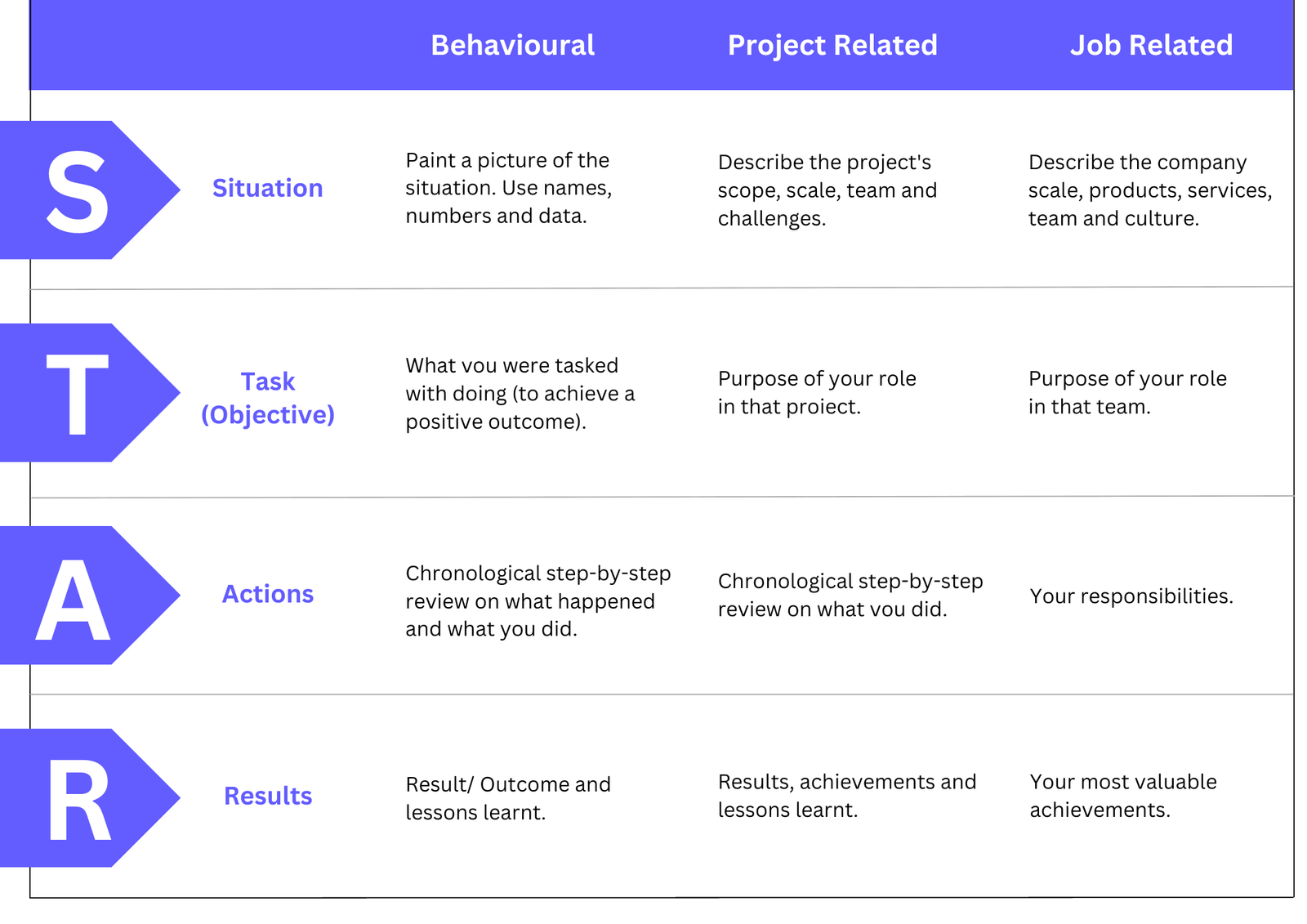
Utilising the STAR Method

Remember to employ the STAR (Situation, Task, Action, Result) method when providing examples. This strategy helps structure your responses clearly and concisely, preventing rambling and highlighting your communication prowess. 

Demonstrating robust communication skills is vital for all government job applications, though it can often be challenging. The techniques outlined above are essential for showcasing the effective non-verbal and verbal communication skills that government hiring managers are keen to observe.

How To Use The STAR Interview Method for Interview Success

STAR-framework

What is the STAR Interview Framework?

Behavioural interviews are a type of job interview that focuses on assessing past behaviour to predict future performance. The STAR (Situation, Task, Action, Result) method for interview is an effective way to prepare for such interviews, allowing individuals to structure their responses and provide concrete examples. With the STAR framework, candidates can showcase their skills and achievements, increasing their chances of success in the interview process. Imagine entering an interview armed with a proven strategy that allows you to deliver concise, compelling responses while showcasing your skills and experiences in a clear and organised manner. That’s precisely what the STAR framework offers. Let’s break it down and understand how it can unlock your interview potential.

The Components of STAR: Situation, Task, Action, Result

Situation: Setting the Stage for Success


In any interview, it is crucial to provide context and background to the situation you are about to describe. By clearly defining the scenario, you enable the interviewer to understand the challenges you faced and the decisions you made.

Task: Defining Objectives and Overcoming Challenges


Now, let’s dive deeper into the specific task or objective that needed to be accomplished in that situation. Share the challenges you encountered and the goals you set for yourself. This step demonstrates your ability to analyse situations and define actionable targets.

Action: Stepping Up and Making an Impact


Here comes the exciting part—detailing the actions you took! Describe the steps you implemented to address the situation at hand. Emphasise the skills you applied, the decisions you made, and how you navigated any obstacles along the way. This showcases your problem-solving abilities and decision-making skills.

Result: Celebrating Achievements and Lessons Learned

Every journey has its destination, and your actions should have produced results. Share the outcomes of your efforts, quantifying achievements wherever possible. Highlight the positive impact you made, lessons learned from the experience, and any personal growth that occurred.

the-star-framework

STAR Technique for Interviews: Examples

Role: Management

Interviewer: “Tell me about a time when you faced a challenging situation at work and how you handled it.”

Candidate:

Situation: “In my previous role as a project manager, we had a tight deadline to deliver a critical project for a client.”
 

Task: “My task was to coordinate the efforts of a cross-functional team, manage resources effectively, and ensure timely completion.”
 

Action: “To address the challenge, I immediately scheduled a team meeting to discuss the project requirements and break down the tasks. I assigned clear responsibilities, set realistic deadlines, and established regular progress check-ins.”
 

Result: “As a result of our collaborative efforts and effective project management, we successfully delivered the project ahead of schedule, exceeding the client’s expectations and receiving positive feedback. Our team’s coordination and proactive approach helped us overcome the challenges and achieve outstanding results.”

In this example, the candidate addresses the interview question by using the STAR method. They provide a specific situation, clearly define their task, explain the actions they took, and conclude with the positive results achieved. This structured response allows the interviewer to assess the candidate’s skills, problem-solving abilities, and their capacity to handle challenging situations effectively.

Role: IT

Interviewer: “Tell me about a time when you had to troubleshoot a complex technical issue and how you resolved it.”

Candidate:

Situation: “In my previous role as an IT support specialist, we encountered a critical system outage during a major software upgrade.”
 

Task: “My task was to identify the root cause of the issue, minimise downtime, and restore system functionality as quickly as possible.”
 

Action: “I immediately initiated a thorough analysis of the system logs, collaborated with the development team to understand the upgrade process, and conducted extensive testing to isolate the problem. After identifying a compatibility issue, I devised a workaround solution and implemented it promptly.”
 

Result: “As a result of my troubleshooting efforts and swift action, the system was successfully restored within two hours, minimising business disruption and ensuring smooth operations. Furthermore, I provided detailed documentation on the issue and the implemented solution, enabling the team to prevent similar issues in the future.”

In this example, the candidate effectively uses the STAR framework to outline the situation, task, action, and result of a complex technical issue they faced. This response allows the interviewer to assess the candidate’s technical problem-solving skills, ability to work under pressure, collaboration with teams, and dedication to minimising downtime.

Why Use the STAR Interview Technique?

The STAR interview questions allow you to captivate interviewers, showcase your abilities, and leave a lasting impression through structured storytelling. 

Presenting Organised and Impactful Responses

Employing the STAR framework allows you to deliver answers in a structured and concise manner. By avoiding rambling and tangents, you ensure that your responses remain focused and coherent, captivating interviewers from beginning to end.

Showcasing Your Skills and Experiences

Behavioural interviews aim to assess your abilities in various situations. The STAR framework enables you to effectively demonstrate your problem-solving skills, decision-making prowess, and capacity to handle challenges professionally. It’s your chance to showcase your unique strengths and stand out from the competition.

Quantifying Achievements: Making a Lasting Impression

Numbers speak volumes. By providing measurable outcomes and tangible results of your actions, you enhance your credibility and make a lasting impression on interviewers. Quantifying your achievements adds a layer of authenticity and demonstrates your impact in a tangible way.

Mastering the STAR Interview Questions and Answers

To harness the full potential of the STAR framework, preparation and practice are paramount. Here’s how you can take your interview performance to new heights:

Craft Tailored Responses: Highlighting Relevance

Customise your STAR responses to align with the specific position you are interviewing for. Emphasise skills and experiences that directly correspond to the job requirements, showcasing your suitability and value as a candidate.

Be Specific and Concise: Balancing Depth and Brevity

Ensure your responses are specific and avoid vague statements. Share detailed examples and provide tangible evidence of your capabilities. Strike a balance between providing thoroughness and brevity to maintain engagement.

Emphasise Your Role: Stand Out from the Crowd

In your STAR responses, highlight your personal contributions and the unique value you brought to the situation. Showcase your leadership, teamwork, or problem-solving skills. Demonstrate your ability to take initiative, drive results, and leave a lasting impact.

Conclusion

The STAR method is a powerful tool for interview preparation and success. By organising your responses using the Situation, Task, Action, and Result structure, you can effectively highlight your skills and experiences. The STAR interview format allows you to provide specific examples, demonstrate your problem-solving abilities, and showcase your potential to prospective employers. So, whether you’re preparing for your next job interview or seeking to enhance your interviewing skills, incorporating the STAR framework can significantly improve your chances of making a lasting impression and securing that coveted job offer.

PSCareers Interview Mastery Course

The best government interview resource.

5+ Hours of Video and downloads from the most experienced PS experts.
Backed by a 7-day 100% Money Back Guarantee.

Interview Mastery course

How To Create Your Personal Value Proposition

personal-value

Value Propositions – a powerful method to help you secure a new job and the answer to one of the most dreaded challenges for interview attendees – “how do I talk about myself?” or “how do I sell my skills in an interview”.  


This method is precisely how to answer questions like:


What are your strengths?


Tell me about yourself.


These simple questions often leave us in knots and yet there is a simple method that can be used for every question like this, with no need to brag, “sell yourself”, or sound arrogant. It’s very simple, and just requires practice and personalisation.

Read on for a professional career coach’s simple framework for constructing great personal value propositions for yourself…


Personal value propositions (PVP) are the best way to answer questions like “why are you a good candidate for this role?”, “why do you want this role?” and “what are your strengths?”. You will use them in every single interview you’ll ever attend and these sentences are the foundation of your personal brand. Strong value propositions are what win job offers, plain and simple. In a panel interview context, a well formed value proposition will allow the panel members to ‘tick the box’ and mark you as suitable for a role, because these statements are evidence-based. Plus they are easy to construct – just use this simple 3-step framework and practice.

What are Personal Value Propositions?

A personal value proposition (PVP) is a promise of value to the organisation you are interviewing with. It’s the reason you get hired. If you’re serious about interview preparation coaching, make sure your value propositions are prepared and rehearsed well before the big day.

Can I Write My Own Personal Value Propositions?

Yes, you can prepare your own using the tools and tips below. I encourage you to put aside 30-60 minutes and create at least four: one related to your target job title and three related to the required skills of the job.

PSCareers Interview Mastery Course

The best government interview resource.

5+ Hours of Video and downloads from the most experienced PS experts.
Backed by a 7-day 100% Money Back Guarantee.

Interview Mastery course

How to Write Your Personal Value Propositions (PVP)

1) Choose your subjects and skills

In addition to having a core value proposition related to your target job title, your other value propositions should reflect the skills needed to do the job. These skills are usually outlined in job descriptions, ads and recruiter discussions. For example, an executive leader could have separate value propositions for:

        • Project planning
        • Leading reviews
        • Process improvement
        • Creating high performing teams

If your target role is a Program Officer, you would have a PVP about being a Program Officer, and then three possible skills you would need PVPs for could be:

        • Program evaluations
        • Reporting
        • Stakeholder management

2) Write PVP using a simple 3-step framework

A PVP is made up of only 1-2 sentences. Short, sharp and to the point. The simplest way to construct one is using the WHAT, WHEN, WHO framework (generally in that order). However, even if you don’t use that framework, any statement that contains at least the WHAT and WHO components can be considered a value proposition.

A) WHAT (skill)?

What skill have you got that they want? (e.g. policy development, strategic advisory, stakeholder engagement, public communications, program implementation).

B) WHEN (have you used the skill)?

Tell us the scale of your experience. Give names, numbers and data (e.g. # of years of experience, size of teams led, budget range, qualifications).

C) WHO (benefited)?

What were the benefits and positive things that come out of using your skill? Use names, numbers and data (e.g. client names, employers, awards, ROI, promotions, budgets, SLAs).

Important Tip When Writing a Personal Value Proposition

The phrase ‘as shown by’ makes it easy. You can use ‘…as shown by…’ to link WHAT and WHEN is a simple way to create a value proposition. E.g. “one of my strengths is project management, as shown by successfully delivering over five ICT projects for Services Australia.”

Examples of Personal Value Propositions

“I will bring to the table proven policy development skills, demonstrated by six years of experience working on large, complex policy review projects for the Department of Home Affairs, including data analysis, research, and external stakeholder consultations.”


“Advising senior leaders is one of my strengths, evidenced by three years at DFAT providing strategic advice and policy briefings to senior government officials from Indonesia, enhancing diplomatic relations and international cooperation.”


“A key strength is turning around under-performing teams. I set clear KPIs and adhere to them, and over the last three years, I have revitalised and led high-performing policy analysis teams of up to 15 staff at the ATO.”


“My executive stakeholder management background includes 8 years of presenting, advising, and negotiating at a C-suite and Deputy Commissioner level as a Program Manager for the Department of Education and the Department of Health and Aged Care.“

Use Your PVP

Don’t like ‘bragging’ or ‘talking it up’? You don’t have to. Using the above formula is just stating the facts and letting the listener make up their own mind. It’s not salesy, but it is absolutely critical. If you don’t know how to deliver powerful value propositions, then you will probably miss job opportunities. They are easy to prepare and just take some practice to execute. Once you have your value propositions nailed, you can also use them to promote your personal brand in everyday work situations, such as introducing yourself in various situations such as with senior leaders, during networking opportunities, at conferences, and in conversations with external partners. These factual statements help to state your credentials in an impressive manner that is guaranteed to connect with audiences.


Working with a coach is a great move to help you develop and practise your value propositions, and this is a central focus in our interview coaching programs. Diving into the preparation and delivery of these essential statements will really help you nail that next big interview and you’re building life-skills valuable throughout your entire career.

Australia's Most Successful Government Interview Coaches

Invest 60 Minutes – Save Months of Pain

Transform your preparation with expert, one-on-one coaching tailored to help you secure top ratings and land the dream offer.

How to Demonstrate Strategic Thinking For Government Career

Strategy is a key component to success. You can’t just randomly move from task to task aimlessly with no clear guide or goal. And so strategic thinking is fast becoming a highly desired skill, and this is just as true for Australian government jobs as other roles. 

In this article, we’ll identify what strategic thinking is, provide examples of strategic thinking, and how to demonstrate strategic thinking skills to government hiring managers.

What is Strategic Thinking?

Strategic thinking is the ability to analyse and plan for the future, focusing on long-term goals and outcomes. Strategic thinking in government jobs involves understanding the broader context, anticipating challenges, and identifying opportunities to improve public services. Strategic thinkers use critical analysis to make informed decisions that align with organisational objectives and public needs. 

What are Strategic Thinking Skills?

Strategic thinking skills cover a wide range of skills that enable someone to use critical thinking to solve complex problems. These skills help organisations to accomplish business objectives, resolve challenges and seek opportunities from obstacles.


Some of the skills included in strategic thinking are:

Analytical Skills

To help an organisation reach pre-defined objectives, individuals must be able to analyse several data sets. Depending on the job role, you might be required to look at financial statements, KPIs, marketing conditions, emerging business trends, or others.

Communication Skills

To help provide enough information for others to take action on specific strategies requires strong communication skills. Communication should be strong between external and internal stakeholders. You should also be able to ensure that you can align people towards a set of shared goals.

Problem-solving Skills

Every organisation faces challenges and problems, and using problem-solving skills is critical to overcome these and move back towards a set of goals. Challenges come in numerous forms from financial to workflow issues, so being able to understand and seek opportunities to resolve them can be critical.

Planning and Management Skills

Implementation of solutions is critical, and to achieve this, good planning and management skills are required.

Australia's Most Successful Government Interview Coaches

Invest 60 Minutes – Save Months of Pain

Transform your preparation with expert, one-on-one coaching tailored to help you secure top ratings and land the dream offer.

Why Are Strategic Thinking Skills So Valuable in Government Roles?

Strategic thinking skills are one of the most sought-after skills that government hiring managers are looking for. Those who can think logically and critically can have a massive impact on the performance of a department, helping to reduce costs and improve customer satisfaction.


And with a complex and ever-changing transforming working environment, being able to analyse and adapt to the changing market conditions is seen as a key attribute.


In addition, having strategic thinking skills can contribute to your career progression, helping you to earn more from your career.

Examples of Strategic Thinking Skills in the Workplace

To be able to put examples of strategic thinking on your resume, you will need to identify examples of strategic thinking at work.

Example One

When a team leader failed to have a clear strategy for achieving organisational goals, they changed their approach to incorporate their team into decision-making. Curating a positive and supportive work environment for team members, they were able to encourage high levels of performance and productivity.

Example Two

A sales manager had no clear sales strategy to build on profits. Instead, they created a system where they fostered personalised customer relationships to improve sales. Using this strategy allowed them to build a rapport with customers, build trust, and generate more revenue.

Example Three

Failure of strategic thinking examples are plentiful too. Many examples are where senior leaders have not appreciated the changes in the industry, such as Blockbusters not embracing digital streaming, Kodak not realising the changes of digital photographs, and Motorola’s failure to solidify their market position in the mobile industry.


By not utilising strategic thinking, two of these companies have filed for bankruptcy and one lost its market lead position.

How to Demonstrate Your Strategic Thinking Skills

While understanding strategic thinking skills is the first step, to ensure you get a chance to secure your dream government role, you need to know how to demonstrate your strategic thinking skills.


There are two locations where you should mention strategic thinking, the personal statement and the experience section.

Personal Statement

In the personal statement, you need to provide specific consequences for your strategic thinking. For example, if your actions have led to an improvement in sales, customer retention, cost cutting, or improvements in workflows, you should mention them. You should also look at mentioning how you’ve done it.


For example, you could talk about leveraging data-driven assignments or collaboration with colleagues and third-party stakeholders.

Experience

Under job experience, you only have one sentence to prove strategic thinking. You should use data to identify what you’ve done and the impact of your actions. For example, you could state these:

        • Developed and implemented a strategic staff retention programme that improved staff retention by 36%.
        • Created a new sales pathway and trained a sales team that improved revenues by 47%.

You should not use lines which are similar to this.

        • Used strategic thinking to complete tasks in the office.
        • Made improvements through strategic thinking.

Tell a Story

Stories are emotive ways to prove your value. So when possible, tell people a story about the strategic thinking example. Start by labelling the challenges, then the solution you developed, the efforts of the team, and finally the conclusion, with statistics.

Demonstrate an Understanding of the Wider Requirements

It can be very tempting to focus on your specific department or section of the business. While your actions might have had a major focus in these areas, it doesn’t mean that you haven’t impacted the wider business, or that there were needs that covered the larger business. 


Therefore, when you’re demonstrating your skills, you need to put these into the context of the whole organisation, not just the department where you’re working.

How These Factors Impact Shapes Strategic Thinking Selection Criteria Answers

The Shapes strategic thinking selection criteria is what the Australian government uses to determine whether candidates have the necessary skills to perform the role being applied for. 


Hiring managers will be looking at applications and determining whether or not there is evidence to demonstrate the required strategic thinking levels required.


The Queensland State government looks at five areas such as supporting strategic direction, achieving results, supporting productive working environments, displaying personal drive and integrity, and communicating with influence.

If you’re able to consider these five elements and utilise them within any answers or examples, you can put your application above the competition and therefore, secure an interview or the role.


You can also use these titles to practise interview questions. For instance, you might be asked to demonstrate how you’ve been able to overcome a challenging team scenario, which you can use in several aspects such as supporting a productive working environment, communicating with influence, and achieving results.


It is important to also consider how you answer this by using the tips above.


Strategic thinking is a critical skill that Australian government positions require, whether it is an entry position or a senior position. Above are tips on how you can demonstrate strategic thinking for any job application while retaining your integrity and maximising your potential salary.

Crafting a Concise Statement of Claims for Public Service Jobs

Introduction

When applying for a job in the public service in Australia, one of the most important documents you will need to submit is a statement of claims. This document is a critical part of the selection process and can often be required of with or without a cover letter. In this blog post, we will provide an overview of what a statement of claims is, why it is important, and how to write one effectively.

What is a Statement of Claims for a Job Application?

A statement of claims is a document that outlines your suitability for a particular job. It is a statement that responds to the selection criteria provided by the employer. Public service jobs in Australia often require a statement of claims as part of the application process. The purpose of a statement of claims is to demonstrate how you meet the selection criteria for the job, which typically includes a range of skills, knowledge, and experience.


The statement of claims should be written in a clear and concise manner, highlighting your relevant skills and experience. It should also demonstrate your understanding of the requirements of the job and how your skills and experience align with those requirements. A statement of claims should not be a generic document that can be used for multiple job applications. Instead, it should be tailored to the specific requirements of the job you are applying for.

Why is a Statement of Claims Important?

A statement of claims is a critical part of the selection process for public service jobs in Australia. It allows employers to assess your suitability for the job and compare your skills and experience to those of other applicants. A strong statement of claims can increase your chances of being shortlisted for an interview and ultimately being offered the job.


Writing a strong statement of claims can also have other benefits. It can help you to clarify your skills and experience, identify areas where you may need to improve and articulate your career goals. It can also help you to stand out from other applicants and demonstrate your commitment to the job.

How to Write a Statement of Claims for a Job Application

Read the Selection Criteria Carefully

Make sure you understand the requirements of the job and what the employer is looking for in a candidate.

Identify Your Relevant Skills and Experience

Look for examples from your work, study, or other experiences that demonstrate how you meet the selection criteria.

Provide Evidence

Back up your claims with specific examples that demonstrate your skills and experience. Use clear and concise language, and avoid using jargon or technical terms that may be unfamiliar to the reader.

Be Specific

Avoid making general statements or using vague language. Instead, provide specific examples that illustrate your skills and experience.

Use the STAR Method

The STAR method is a useful framework for writing effective statements of claims. It involves outlining the Situation, Task, Action, and Result of a particular experience or achievement.

Use Active Language

Use verbs that demonstrate action and achievement, such as “managed,” “created,” or “implemented.”

Be Concise

Stick to the point and avoid including irrelevant information.

Address All Selection Criteria

Make sure you respond to each selection criterion in your statement of claims.

Use Bullet Points

Bullet points can help to break up long paragraphs and make your statement of claims easier to read.

Proofread

Make sure you proofread your statement of claims for spelling and grammatical errors.

Selection Criteria Writing

Access expertly written selection criteria responses designed to help you land your next public sector role.

STAR-framework

Example of a Statement of Claims

Selection Criteria 1: Demonstrated experience in project management

I have over five years of experience in project management, including managing complex projects with budgets of up to $1 million. In my current role as Project Manager at XYZ Company, I have successfully managed a team of 10 staff members, ensuring that projects are delivered on time, within budget, and to the satisfaction of stakeholders. One example of my success in project management was the implementation of a new project management software, which resulted in a 20% increase in efficiency and a 15% reduction in costs.

Selection Criteria 2: Demonstrated ability to communicate effectively with stakeholders

As a Project Manager, I understand the importance of effective communication with stakeholders. In my current role, I regularly liaise with internal and external stakeholders, including senior executives, project teams, and clients. I have developed strong written and verbal communication skills, and I am able to communicate complex ideas in a clear and concise manner. For example, I recently delivered a presentation to the Board of Directors outlining the progress of a major project, which received positive feedback from all stakeholders.

Selection Criteria 3: Demonstrated ability to work collaboratively in a team environment

Throughout my career, I have demonstrated the ability to work collaboratively in a team environment. As Project Manager at XYZ Company, I have successfully led cross-functional teams of up to 20 staff members, ensuring that team members are motivated, engaged, and working towards common goals. I have also fostered a culture of collaboration and knowledge sharing, resulting in increased team cohesion and a more positive work environment.

Common Mistakes to Avoid When Writing a Statement of Claims

When writing a statement of claims, there are several common mistakes that applicants make. These include:

Failing To Address All Selection Criteria

Make sure you respond to each selection criterion in your statement of claims. This is the most important part of your application, and failing to address all criteria can result in your application being rejected.

Providing Generic Responses

Avoid using generic language or making generic statements. Instead, provide specific examples that demonstrate your skills and experience.

Failing To Provide Evidence

Back up your claims with specific examples that demonstrate your skills and experience. This is particularly important for selection criteria that require specific skills or experience.

Using Jargon or Technical Terms

Avoid using jargon or technical terms that may be unfamiliar to the reader. Use clear and concise language that can be easily understood by someone outside your field.

Being Too Verbose

Avoid using long sentences or paragraphs. Stick to the point and be concise.

Conclusion

A statement of claims is a critical part of the selection process for public service jobs in Australia. It allows employers to assess your suitability for the job and compare your skills and experience to those of other applicants. Writing a strong statement of claims can increase your chances of being shortlisted for an interview and ultimately being offered the job.


To write a strong statement of claims, make sure you read the selection criteria carefully, identify your relevant skills and experience, provide evidence to back up your claims, and use the STAR method. Avoid common mistakes such as failing to address all selection criteria, providing generic responses, and being too verbose.


Remember, a statement of claims is your opportunity to demonstrate why you are the best candidate for the job. Take the time to craft a strong statement of claims, and you will increase your chances of success in your job application.

Decoding VPS Salaries:A Comprehensive Guide to Victorian Public Service Pay Scales

Introduction

Working in the Victorian Public Service (VPS) can be both rewarding and financially fulfilling. However, navigating the complexities of VPS salaries and pay scales can be confusing, especially for new employees or those looking to move from the private sector. This comprehensive guide aims to shed light on VPS pay structures, salary bands, and the factors that influence pay rates within the VPS. Whether you are already a VPS employee or considering a career in the VPS, understanding the intricacies of VPS salaries is essential to make informed decisions about your career path.

Overview of the Victorian Public Service (VPS)

The Victorian Public Service is the state government workforce in Victoria, Australia, responsible for delivering public services to the community. It encompasses various departments, agencies, and organisations dedicated to serving the public’s interests. The VPS comprises a diverse range of roles, from administrative and support staff to highly specialised professionals, each contributing to the efficient functioning of government services.

Importance of Understanding VPS Salaries and Pay Scales

Understanding VPS salaries and pay scales is crucial for several reasons. Firstly, it allows employees to gauge their position within the VPS hierarchy and compare their remuneration with industry standards. Secondly, it helps prospective employees negotiate fair salaries when joining the VPS. Finally, comprehending pay scales enables employees to plan their career progression and potential earning capacity within the VPS.

Brief Explanation of VPS Salary Bands and Ranges

VPS salary bands are structured to categorise employees based on their roles and responsibilities. Each band encompasses multiple levels, each representing a step in the career ladder. The VPS salary ranges within each band signify the minimum and maximum salary points available for the corresponding level. These ranges provide flexibility for negotiation and reward employees based on their skills, experience, and performance.

VPS Salary Structure

Introduction to VPS Pay Scales and Grades

The VPS pay scale is a systematic framework that determines salary levels for different job roles. It categorises positions into grades, with each grade representing a specific salary range. The VPS pay scales take into account the complexity of the job, the level of responsibility, required qualifications, and the market demand for specific skills.

VPS Grade Structure


            Category                   GradeAbbreviation
VPSVPS Grade 1VPSG1
VPSVPS Grade 2VPSG2
VPSVPS Grade 3VPSG3
VPSVPS Grade 4VPSG4
VPSVPS Grade 5VPSG5
VPSVPS Grade 6VPSG6
 Senior Technical SpecialistSTS7
 Senior Executive Service 1SES-1
 Senior Executive Service 2SES-2
 Senior Executive Service 3SES-3
    

VPS pay scales are designed to be fair and competitive, ensuring that employees are rewarded adequately for their contributions. The scales are periodically reviewed to reflect economic conditions and industry standards changes. As an employee progresses through their career, they may move up the pay scale, earning higher salaries as they gain experience and take on more significant responsibilities.

Several factors influence salary determination within the VPS. These include the level of education and qualifications, years of experience in the relevant field, job performance and achievements, and the demand for specific skills in the job market. Additionally, negotiation skills and the ability to showcase one’s value to the organisation can also impact salary offers.

Selection Criteria Review (Graduate)

Detailed assessment of your written statement starting at $99

User persona

Comparing VPS Pay Rates with APS Pay Scales

The Australian Public Service (APS) has its own pay scales and salary structures. While both the VPS and APS aim to attract and retain talented employees, APS pay rates may differ from that of VPS due to varying job demands, geographic locations, and organisational structures. It is essential for VPS employees to understand these differences when evaluating their salary packages. Typically we find that APS has better benefits (e.g. flex time and higher super contributions) but the VPS salaries are higher on the whole (for equivalent work).

VPS Salary Breakdown by Level

VPS 3-6 Salary Ranges

The VPS is divided into various levels, such as VPS 3, VPS 4, VPS 5, and VPS 6, each corresponding to different roles and responsibilities. The salary ranges within these levels provide a clear idea of the earning potential for employees at each stage of their career. For example, VPS 3 positions are typically entry-level roles (such as administrative support), while VPS 6 positions involve more senior and specialised responsibilities and typically people management.

Salary progression within VPS levels depends on individual performance, experience, and the successful completion of designated milestones. Employees may be eligible for pay increases or promotions as they demonstrate their capabilities and meet performance expectations.

VPS Executive Pay Scale

VPS executive roles involve top-level management positions with significant responsibilities in decision-making and policy implementation. The VPS executive pay scale differs from the standard pay scale and offers competitive salaries to attract qualified professionals capable of leading government departments and agencies effectively. Executives (SES-level) are typically appointed on a 5 year contract.

VPS Pay Scale and Enterprise Agreement (EBA)

The VPS Enterprise Agreement is a legally binding document negotiated between the VPS and employee representatives. It outlines the terms and conditions of employment, including salary increases, leave entitlements, and other benefits. The EBA aims to promote fair and equitable treatment of VPS employees while providing a framework for resolving workplace issues.

Mobility payments are additional allowances offered to employees who transfer to roles that are deemed hard to fill or located in remote areas. These payments are designed to incentivise employees to take on challenging roles and help address staffing gaps in critical areas.

Superannuation in the VPS

Superannuation is a crucial component of VPS salaries and retirement planning. The VPS contributes a percentage of an employee’s salary to their superannuation fund, ensuring financial security during retirement. The superannuation rate is typically the legislated minimum.

Clarifying Whether VPS Salaries Include Superannuation

Advertised VPS salaries (up to and including VPS 6) typically do not include superannuation. SES roles are typically the total package, including both the salary and superannuation.

Conclusion

Understanding VPS salaries and pay scales is essential for every employee within the Victorian Public Service. It allows individuals to make informed career decisions, negotiate fair salaries, and plan for their financial future. By comprehending the intricacies of VPS salary bands, pay rates, and the factors influencing remuneration, VPS employees can confidently navigate their career paths and work towards achieving their professional goals within the public service sector.

Understanding APS Salaries: A Comprehensive Guide to Australian Public Service Pay Rates

Introduction

Working in the Australian Public Service (APS) can be an appealing career choice for many individuals due to its stable and rewarding nature. However, like any profession, understanding the salary structure is essential to making informed decisions about one’s career path. In this comprehensive guide, we will delve into the intricacies of APS pay rates, including the different levels, pay scales, and factors that influence salary determination.

APS Salary Structure

The APS salary structure is based on a system of levels and bands that outline the pay rates for different positions within the public service. Each level corresponds to certain responsibilities, qualifications, and experience, with higher levels generally indicating higher levels of responsibility and complexity of work.

APS employees can be classified into various levels, which include APS 1 to APS 6, Executive Level 1 (EL1), Executive Level 2 (EL2), and Senior Executive Service (SES). Each level comes with its own distinct pay rate.

Factors Influencing APS Salary Determination

Several factors influence the determination of APS salaries, and they can vary depending on the level and responsibilities of the position. Some of the key factors include:

1. Classification Level:

As mentioned earlier, the classification level of the position plays a significant role in determining the salary. Higher levels often require more experience, qualifications, and responsibilities, which are reflected in the pay.

2. Budget Allocations:

The budget allocated to each agency can influence the salary packages they can offer to their employees. If you are asking for a pay bump above the next increment, it can often require Deputy Secretary approval.

3. Experience and Qualifications:

The candidate’s relevant work experience and educational qualifications are crucial factors in salary determination. Those with more experience and higher qualifications positions you to negotiate for a higher salary.

Did you know? The Australian Government offers a range of graduate programs across its various departments and agencies. These programs provide graduates with the opportunity to work in a challenging and dynamic environment to develop their skills and contribute to the important work of the Australian Government.

4. Specialised Skills:

Positions that require specialised skills or expertise may receive higher salaries to attract qualified professionals.

5. Location:

The cost of living and job market conditions in different regions can impact APS salaries. For example, we’ve generally found that APS employees are paid less in Hobart than they are in Canberra. This is not necessarily a reflection of cost of living but rather lack of employer competitiveness and that central agencies are usually in Canberra, with smaller frontline agencies in other places.

6. Industry Demand:

The demand for specific skills and expertise within certain sectors can impact the salary ranges offered by agencies operating in those industries. For example, graduate lawyers are often offered higher starting salaries than their non-lawyer counterparts.

Selection Criteria Review (Graduate)

Detailed assessment of your written statement starting at $99

User persona

APS Pay Rate Breakdown by Level

Each Australian Government department has its own enterprise agreement with different working hours, benefits and of course salaries. In this article we have given general ranges within each level but be sure to check the specific EA of the Department or agency you are applying for.

APS1

Minimum: $45,205
Maximum: $56,834

The APS1 level represents the entry point for individuals in the APS. Employees at this level predominantly provide administrative and basic support services within their respective agencies. It is very uncommon to find an APS 1 role these days, unless it’s a cadetship or similar program.

APS2

Minimum: $47,610
Maximum: $62,967

At the APS2 level, employees continue to provide administrative support. As with the APS 1 level, it is very unusual to find an APS 2 position anymore. You might find one if you are doing a uni prac rotation, for example.

APS3

Minimum: $52,266
Maximum: $71,408

APS3s are typically in administrative roles or alternatively, graduate program participants.

APS4

Minimum: $53,262
Maximum: $77,819

APS4 roles cover a range of occupations. An APS4 employee may be in a more senior administrative role or typically first year out of a graduate program (for example, an entry level policy role).

APS5

Minimum: $56,129
Maximum: $86,211

At the APS5 level, employees are engaged in professional work and may manage specific projects. It really depends on what type of occupation and what type of agency you are in. For example, if you are in a frontline Human Services role, you could have a number of staff under you. If you are in a policy role or a central agency, it’s extremely unlikely that you will have any management responsibility but will rather take on increasing policy or program responsibility.

APS6

Minimum: $63,609
Maximum: $106,713

APS6 roles involve a high level of expertise and responsibility, including managing complex projects or teams.

EL1

Minimum: $98,904
Maximum: $139,933

EL1 employees hold middle-management positions, where they are responsible for the strategic direction of their respective teams or areas. Again, it will depend on whether you are in a line agency or a central agency but EL1 are reasonable senior positions with a lot of responsibility. Jumping from the APS 6 level to EL1 is usually the most difficult step for people to make.

EL2

Minimum: $128,291
Maximum: $171,842

EL2 roles are senior management positions, involving shaping policy and leading significant projects or teams. EL2s can manage from a few people all the way up to a few hundred.

Superannuation in the APS

In addition to your base salary, Australian Public Service (APS) employees also receive superannuation contributions from the government. Superannuation serves as a retirement savings plan, where a portion of an employee’s salary is invested to provide financial security during retirement.

The APS superannuation rate is typically determined by the government and may be subject to change over time. As an APS employee you will be earning one of the highest superannuation contributions in the country (15.4% at time of writing) – well above the legislated minimum.

PSSap - the current superannuation system for APS employees

This is not financial advice – always consult a financial advisor. 

Designed exclusively for both current and former APS employees, PSSap (Public Sector Superannuation Accumulation Plan) offers a tailored approach to superannuation. This plan allows you to customise various aspects, such as insurance cover levels and investment options, to suit your individual circumstances. 

Your employer contributes 15.4% of your super salary directly into your PSSap account. You have the option to enhance your super savings by making before-tax and after-tax contributions or consolidating funds from other super accounts.

Conclusion

Navigating the Australian Public Service salary system can seem complex, but with a solid understanding of the APS levels, pay scales, and factors influencing salary determination, individuals can make informed decisions about their careers. Remember that salary is not the only consideration when choosing a job; other factors such as job satisfaction, work-life balance, and opportunities for growth and development also play crucial roles in career decisions. By staying informed and being proactive in career planning, APS employees can chart a rewarding and fulfilling professional journey in the Australian Public Service.

error: Content is protected !!